
Why a Noisy Garage Door Is More Than Just an Annoyance
Learning how to quiet a noisy garage door is something most homeowners need at some point — and the good news is that many fixes are simple, fast, and inexpensive.
Here are the most common ways to quiet a noisy garage door:
- Lubricate moving parts — Apply silicone spray or white lithium grease to rollers, hinges, springs, and bearing plates every six months
- Tighten loose hardware — Check and snug up all nuts, bolts, and bracket screws with a socket wrench
- Replace metal rollers with nylon rollers — Nylon rollers significantly reduce metal-on-metal contact and vibration
- Clean the tracks — Remove dirt and debris from the tracks (but do not lubricate them)
- Install an opener isolator kit — Reduces vibration transfer from the opener to your ceiling and walls
- Upgrade to a belt-drive opener — Much quieter than a chain-drive model for day-to-day operation
- Add insulation or perimeter seals — Helps reduce both mechanical noise and sound transmission into the home
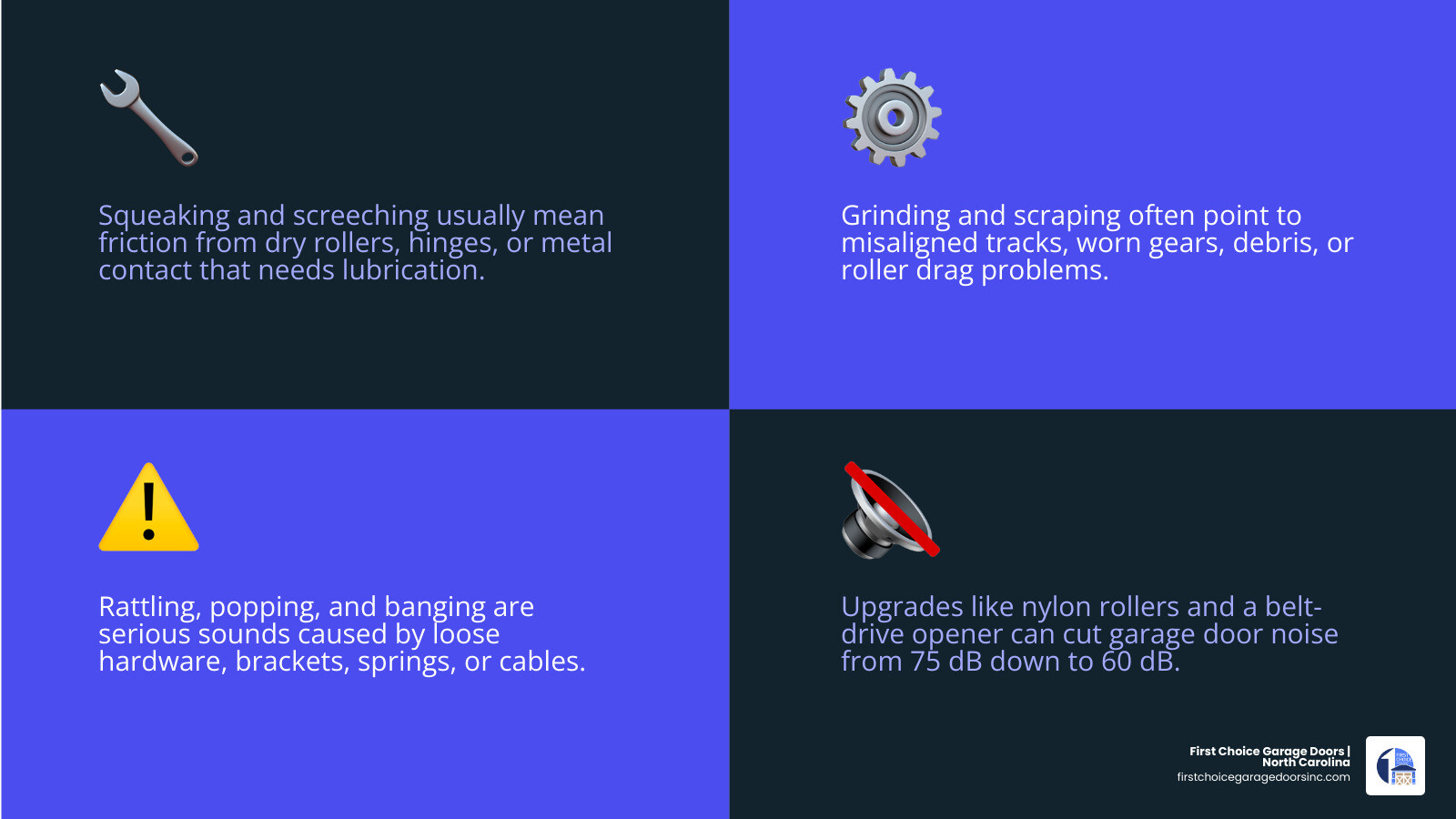
That grinding screech at 6 AM is your garage door’s way of asking for help. And it is worth listening to — because noise is almost always an early warning sign. A little metal-on-metal friction today can turn into a worn roller, a bent track, or a failing spring tomorrow. According to real-world testing, a basic quieting kit — nylon rollers, quieting sleeves, and fresh lubrication — can reduce garage door noise from 75 decibels down to around 60 decibels. That is a meaningful difference, especially if your garage is attached to your home and shares a wall with a bedroom or living space.
A standard hollow steel garage door has a Sound Transmission Class (STC) rating of only about 17, compared to 30 to 34 for a typical interior wall. That means your garage door is likely the weakest link when it comes to noise — both the mechanical sound of the door itself and outside noise coming in.
The causes behind a noisy door range from something as simple as dry hinges to something as serious as a broken spring. Knowing which problem you are dealing with changes everything about how you fix it — and whether it is safe to fix it yourself.
I’m Tony Aguilar, founder of First Choice Garage Doors, Inc., with over 30 years of hands-on experience diagnosing and repairing exactly the kinds of noise issues covered in this guide on how to quiet a noisy garage door. In the sections ahead, I’ll walk you through how to identify what your door is trying to tell you, what you can safely fix yourself, and when it is time to call in a professional.
How to Quiet a Noisy Garage Door: Start by Identifying the Sound
Before we grab the toolbox, we need to perform a little “garage door whispering.” Every rattle and groan is a specific symptom. We recommend standing in the garage while someone else operates the door. Watch the movement and listen closely. Is the sound coming from the top, the sides, or the motor unit itself?
Identifying the specific type of noise is the first step in listening up when your garage door noise means trouble. If you can pinpoint the sound, you’re halfway to the solution.
Squeaking and screeching usually mean friction
If your door lets out a high-pitched squeak, it’s usually screaming for lubrication. This happens when metal rollers rub against metal tracks or when hinge pins become bone-dry. Over time, metal-on-metal contact creates heat and wear. If you ignore it, you’re looking at the sound of silence: fixing your screeching garage door becoming a much more expensive repair. Usually, a simple application of the right lubricant can silence these high-pitched complaints immediately.
Grinding and scraping often point to track or opener problems
A deep grinding sound is often more mechanical. It might mean your rollers are “skating” rather than rolling, or that the tracks are misaligned, forcing the door to fight its way up. In some cases, grinding comes from the opener’s internal gears wearing down. This grinds, pops and bangs guide explains that scraping often indicates the door is rubbing against the vertical tracks or the weatherstripping is too tight.
Rattling, popping, and banging are the sounds to take seriously
Rattling is often just loose hardware — nuts and bolts that have vibrated loose over hundreds of cycles. However, popping and banging are red flags. A loud bang, often sounding like a gunshot or a car backfiring, usually means a torsion or extension spring has snapped. If you hear these sounds, stop using the door immediately. There are many more reasons a garage door could become noisy, but sudden bangs involve high-tension components that require professional attention.
Safe DIY Fixes That Quiet Most Garage Doors

Once you’ve identified the sound, you can start the quieting process. Safety is our top priority. Before you begin, disconnect the power to the garage door opener so no one accidentally activates it while your fingers are near the tracks. Use a sturdy ladder and ensure you have a helper if you need to hold the door in a specific position.
Lubricate the right parts the right way
Proper lubrication is the “silver bullet” for about 70% of noisy doors. You should focus on:
- Rollers: Apply a drop to the bearings (if they are metal).
- Hinges: Lubricate the pivot points.
- Springs: Run a bead of lubricant across the entire length of the coils to prevent “spring “chatter.”
- Bearing Plates: These are located at the ends of the spring bar.
Crucial Note: Never lubricate the inside of the tracks. Grease in the tracks actually attracts dust and hair, which creates a sticky sludge that makes the rollers slide instead of roll, causing more noise and wear.
Why WD-40 is not the answer
Many homeowners reach for the blue and yellow can of WD-40, but this is a mistake. Standard WD-40 is a degreaser and a solvent, not a long-term lubricant. It might stop a squeak for a day or two, but it will eventually dry out the existing grease and attract more dirt. Instead, use a silicone-based spray or white lithium grease. These are designed to stay “wet” and provide a protective barrier that resists dust buildup.
Tighten loose hardware and clean the tracks safely
Because a garage door vibrates every time it moves, the nuts and bolts naturally loosen over time. Use a socket wrench to check the bolts on the tracks, the roller brackets, and the hinges. Be careful not to overtighten and strip the screw holes in the thin metal panels. While you are there, use a damp rag to wipe out the tracks. Removing small pebbles, dried leaves, or dead insects can prevent the “thump-thump” sound as the rollers pass over debris.
How to quiet a noisy garage door with routine roller and hinge care
Rollers don’t last forever. If your rollers have flat spots, cracks, or are rusted shut, they need to be replaced. Upgrading to nylon rollers with sealed ball bearings is one of the single best investments you can make for a quiet home. They glide smoothly and don’t require the same frequent lubrication as steel.
When checking your hardware, keep your rollers rolling with local Easton garage door care tips in mind. However, a major safety warning: Never attempt to remove the bottom roller bracket. This bracket is under extreme tension from the lift cables. If you need the bottom rollers replaced, this is a job for our team.
Check Balance, Tracks, and Opener Issues Before Noise Gets Worse
Sometimes the noise isn’t about friction; it’s about physics. If your door is out of balance or the tracks are crooked, no amount of spray will fix the problem.
How to quiet a noisy garage door when the opener is the culprit
If the “rumble” is coming from the motor unit on your ceiling, the opener itself might be the issue.
- Chain Tension: A loose chain will “slap” against the rail. Tighten the adjustment bolt on the trolley until the chain has a slight droop but doesn’t touch the rail.
- Isolator Kits: These are rubber bushings that sit between the opener and the ceiling straps. They absorb vibrations so the noise doesn’t travel through your home’s framing into the rooms above.
- Drive Type: If you have an old chain-drive model, it will always be louder than a belt-drive.
| Opener Type | Noise Level | Maintenance |
|---|---|---|
| Chain-Drive | High (Metal-on-metal clanking) | Requires regular lubrication |
| Belt-Drive | Very Low (Smooth rubber belt) | Low maintenance; very quiet |
| Screw-Drive | Moderate (Whirring sound) | Requires special lubricant |
For more details on making the switch, check out our guide on should you get a belt or chain garage door opener?
How to safely inspect door balance and track alignment
A noisy door is often an unbalanced door. To check this, pull the emergency release cord (the red handle) and lift the door halfway by hand. A properly balanced door should stay in place. If it slams shut or shoots upward, the springs are under- or over-tensioned. This imbalance puts massive strain on the opener motor, causing it to strain and groan.
Also, look at the tracks. They should be perfectly vertical. If they are slightly tilted, the door will bind. You can loosen the mounting brackets slightly and use a rubber mallet to gently tap the track back into alignment, then retighten.
Red flags that mean stop DIY and call a pro
We love a good DIY project, but certain noises are dangerous. If you see a gap in your spring, a frayed cable that looks like a “fuzzy” wire, or if the door is hanging crookedly, do not touch it. These components are under enough force to cause serious injury. Automatic garage doors vs manual garage doors both rely on these high-tension systems, and they require specialized tools to repair safely.
Upgrades That Make a Garage Door Much Quieter
If you’ve lubricated and tightened everything and the door is still too loud for your liking, it might be time for some strategic upgrades. These changes can take a door from “tolerable” to “nearly silent.”
The best hardware upgrades for quieter day-to-day operation
As mentioned, nylon rollers are the gold standard. While standard steel rollers are cheap, they transmit every vibration from the track directly into the door panels, which act like a giant drum. High-quality nylon rollers with 13 ball bearings can reduce noise levels by up to 50%. You can also install “quieting sleeves” — small plastic tubes that fit over the roller stems to prevent them from rattling inside the hinges.
Opener upgrades that reduce vibration and wake-ups
If your opener is more than 10-15 years old, it’s likely reaching the end of its lifespan. Modern belt-drive openers use a steel-reinforced rubber belt that eliminates the “clack-clack-clack” of a chain. If you’re tired of the noise, converting a chain drive garage door opener to a belt drive is the single most effective upgrade you can perform.
Insulation and soundproofing for attached garages
If the mechanical noise is gone but you still hear the “rumble” inside your house, you need soundproofing.
- Insulated Doors: Polyurethane foam-injected doors are much heavier and denser, which naturally dampens sound.
- Mass-Loaded Vinyl (MLV): This is a heavy, flexible material you can attach to the door panels. It adds mass, which blocks sound waves from passing through the thin steel.
- Perimeter Seals: Install new weatherstripping on the sides and top of the door. If air can get in, sound can get in. A 1% gap in your door’s seal can reduce its sound-blocking effectiveness by up to 15%.
Preventive Maintenance That Keeps Your Garage Door Quiet
The secret to a quiet door isn’t a one-time fix; it’s a habit. We recommend a full “peace and quiet” inspection every six months — usually in the spring and fall.
A simple maintenance checklist homeowners can follow
- Listen: Run the door and note any new sounds.
- Inspect: Look for worn rollers, frayed cables, or loose hinges.
- Clean: Wipe the tracks and the photo-eye sensors.
- Tighten: Snug up the hardware.
- Lubricate: Apply silicone spray to all moving parts (except tracks).
What to check before winter and during heavy-use seasons
In our service areas like Fayetteville, NC, and Easton, MD, temperature changes can affect your door. Cold weather causes metal to contract and lubricants to thicken. In the fall, it is vital to perform garage door maintenance tips to keep your door in top shape. A fresh coat of cold-weather-rated lubricant can prevent the door from “sticking” to the floor or screeching when the mercury drops.
Why regular service prevents scary noises later
Think of garage door maintenance like an oil change for your car. It’s much cheaper to spend 15 minutes lubricating your hinges today than it is to replace a burned-out opener motor next year. The silent treatment: how regular maintenance reduces garage door noise isn’t just about comfort; it’s about extending the life of your entire system.
Frequently Asked Questions About How to Quiet a Noisy Garage Door
Can lubrication alone fix a noisy garage door?
In many cases, yes. If the noise is a simple squeak or creak caused by dry metal, lubrication will fix it. However, if the noise is a grind or a bang, lubrication is just a “band-aid” for a mechanical failure that needs a real repair.
Should you lubricate garage door tracks?
No! We see this mistake all the time. Lubricating the tracks creates a sticky mess that actually traps dirt. The rollers need friction to turn; if the track is greasy, the rollers will slide, creating flat spots and more noise. Keep the tracks clean and dry.
Will insulation make the door too heavy?
Adding lightweight foam panels usually won’t affect the door. However, adding heavy materials like Mass-Loaded Vinyl can add 100+ pounds to the door. This requires a professional to re-tension your springs to handle the extra weight, otherwise, you will burn out your opener motor.
Conclusion: Get the Peace and Quiet You Deserve
A noisy garage door is more than a nuisance; it’s a symptom of wear and tear that can eventually lead to a total system failure. By following this guide on how to quiet a noisy garage door, you can tackle the simple fixes yourself and know exactly when to call for help. Whether it’s a simple lubrication session or a full upgrade to a silent belt-drive system, taking action now will save you money and stress in the long run.
If you’ve tried the DIY steps and that “metal dragon” is still roaring in your garage, we are here to help. From Fayetteville, NC to Columbia, MD, our expert technicians can diagnose and silence even the most stubborn door. For more information or to schedule an inspection, check out our garage door repair services and let us help you find the sound of silence.